
A “Baker’s dozen” is twelve plus one.
Starting in February 1970, fifty years ago, CTI Records began releasing their CT 500 series singles. There were a baker’s dozen, plus one, released with the original style green CTI labels used on the initial release of singles and albums for the newly independent CTI Records.
In this post, and linked posts, I’m going to look at Taylor’s Dozen. The curious case of the first fourteen singles released by Creed Taylor starting in 1970 and running through to early 1971. If you came across many of these 45s while cratedigging [1]https://en.wiktionary.org/wiki/cratedigger, you’d probably wonder what they were, who they were, and mostly, what they were doing on a jazz label?
They are presented here in label catalog number order. That wasn’t necessarily the order in which they were released. Many of the singles were pressed in limited numbers for distribution to radio stations and jukebox companies, as well as a few hundred pressings that went to record stores primarily in the Northeastern and Washington, D.C./Baltimore/Philadelphia areas.
Included in this mix are the A-Side and B-Side of each and every single, except where the sides were identical, which was the case in a couple of the singles. They were often only released in mono for both FM and AM radio play. The tracks are the exact single edits, which in some cases are different from the album versions. [2]Many of the 7″ 45RPM singles I used for this mix were not in great shape. They required quite a bit of restoration. Even then, I resisted the temptation to use the album version, if ever … Continue reading
The mix includes a few well-known tracks, not least Dave Frishberg’s baseball valedictory – Van Lingle Mungo; a rare outing by Don Felder prior to joining the Eagles; Creed’s longtime backstops Antonio Carlos Jobim and Astrud Gilberto, also Hubert Laws. There is not much here for “jazz heads” but something for everyone who loves the seventies.
CONTEXT
Possibly more than at any other time in Creed’s production history, music was rapidly changing. Post-war austerity was over; the summer of love was breaking up; music was going electric; the Beatles had said hello and goodbye. More importantly, jazz bop had done post-bop and was moving on. Parents had money, but more importantly, so did their kids.
The music industry has always been fickle; styles change quickly, artists get dropped, swapped, and are forced by contract to record and deliver albums, which, as we’ll see in future posts, sometimes never get released. This was as true at the start of the 1970s as it is today. Switching from A&M and A&M distribution for CTI and going solo would have required Creed Taylor to do a lot of contract negotiation and legal work, using industry contracts established over his first 15 years as a producer.
PLAN
At A&M, Creed had a production deal where CTI Recordings would be an imprint of A&M, including recording, pressing, distribution, and marketing of the work Creed was doing for them. Creed produced albums for A&M CTI through mid-1969. In the switch over between A&M CTI and CTI Inc., there were a number of albums that were recorded that came out on A&M CTI, some came out the following year on CTI Inc., and a couple that would not get released until much later, or only in Japan through their deal with King Records.
It is a common misunderstanding that Creed was an employee of A&M or that Creed Taylor Inc. was only formed as an imprint of A&M. CTI was formally registered in 1966, a full 10 months before Creed inked his deal with Jerry Moss and Herb Alpert. CTI was and would remain an independent music production company that would have music released on many labels, including A&M, CTI, KUDU, Salvation, and Three Brothers Records.
With Vic Chirumbolo as Vice President of Sales and Marketing, the immediate plan from Chirumbolo and Taylor, was two album series. First the 1000-series, which would be more pop oriented and sell for $4.98. The corresponding singles, the CT 500-series, with the same label style, would sell for 99¢ and discounted after 4-weeks to 75¢.
The 6000-series which would be jazz oriented and retail for $5.98. Taylor and Chirumbolo were already working on a contract with King Records in Japan, and the first releases there would go out in April 1970. They also quickly inked deals in Europe.
LABELS
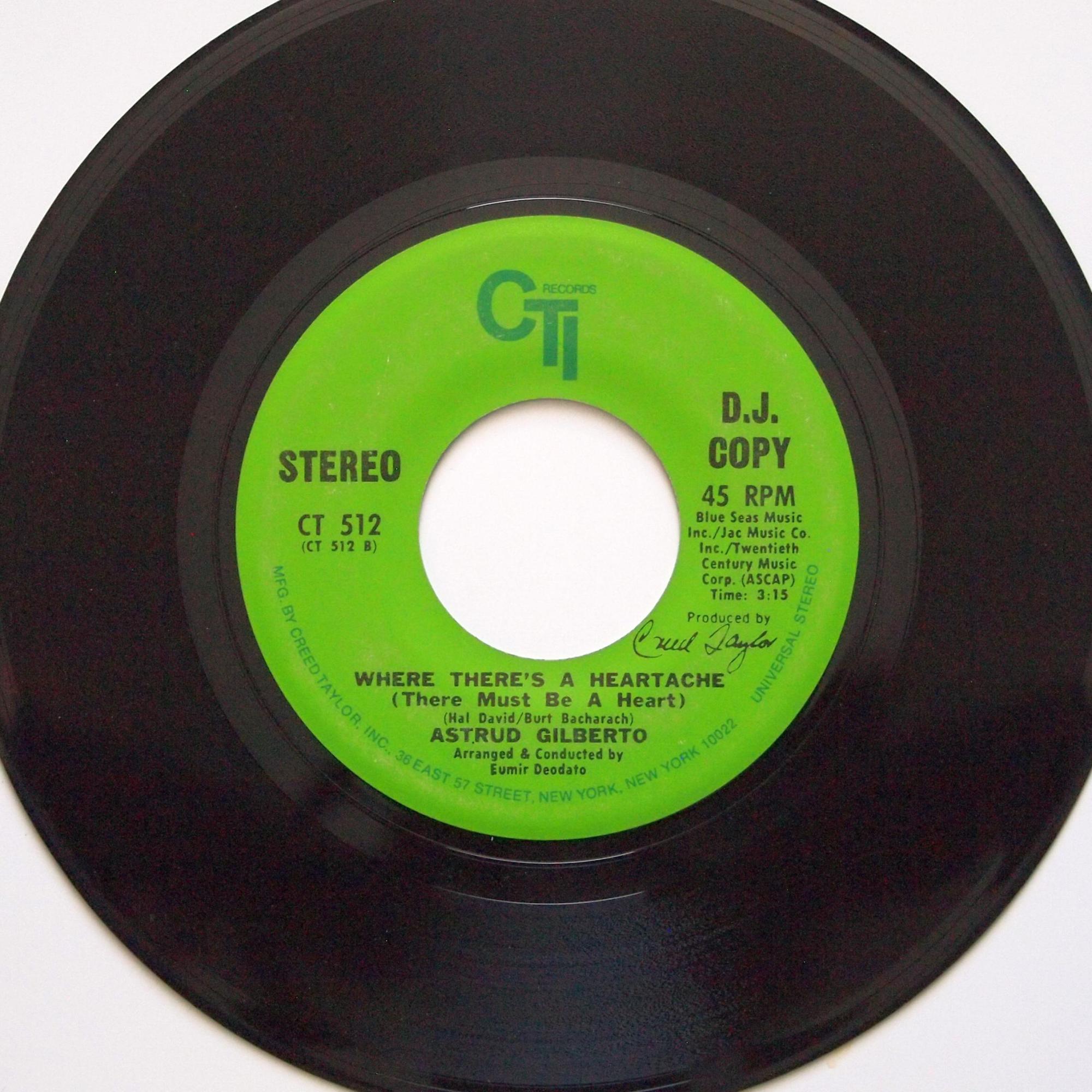
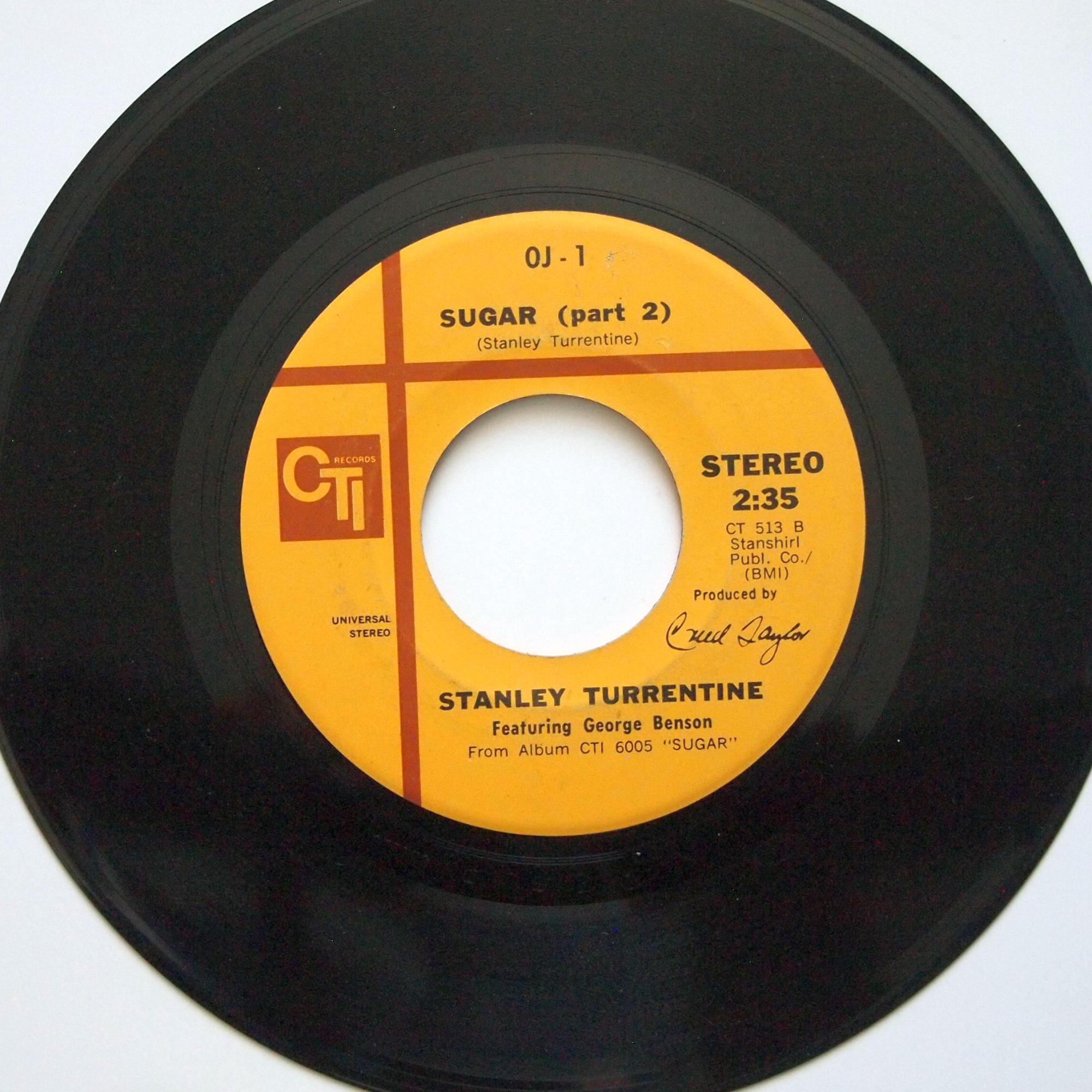

At least as the initial releases of Taylor’s Dozen rolled out, the 500-series would have green labels for general release and white promo labels for DJ/radio station copies. The corresponding album releases in the CT 1000-series would also use the same labels and colors but were short-lived, with only five albums.
The CTI 6000-series would use the green labels for its first six releases. It switched to orange/gold labels from CTI 6008. At the same time, the singles switched to the OJ-series and used the same labels. Seen in the pictures are the general release versions of the 7″ 45RPM pressings. The third is the Australian pressing of Nina Simone’s Baltimore from 1978; all the Australian pressings continued to use the green label [3]https://www.discogs.com/artist/97480-Creed-Taylor?superFilter=Credits&country=Australia&label=CTI+Records&format=7%22.
In Europe and Canada, distributors manufactured their own releases with country/geography-specific information, and the green labels persisted beyond 1971 but eventually faded out as the orange/gold USA releases gained popularity and charted, and imports really became almost a market.
The traditional orange/gold label that most of us know from 1971 onward came in after Creed hired Bob Ciano as Art Director. It’s unclear if this label was Bob’s design or just influenced by him. As we’ll see later, Bob hand-drew the Kudu label and font.
As far as I’m aware, the last album release with the CT 1000 style labels was Freddie Hubbard’s First Light. It used green labels for the promo version with “Radio Station Copy” nomenclature printed on the left of the label.
FOLK, FUSION AND FUNK
Initially, Taylor had wanted to expand CTI beyond his more traditional Jazz roots. Taylor was looking for “masters to purchase”
“I would sincerely like to find some more product – especially soul, rock, and country music produced in the south”
Creed Taylor – Feb 28th, 1970 – Billboard Magazine.
Creed has been qouted many times saying something to the effect of “if it’s popular it sells, if it’s jazz it doesn’t”. Clearly at least, Creed would try to go beyond just jazz as well as continually trying to popularize jazz.
The initial singles came from the 1969 recordings. First was Hubert Laws recorded in Memphis; next was with folk singer Kathy McCord, produced by Don Sebesky, recorded at Rudy Van Gelder’s studio in Englewood Cliffs; the third, “Flow,” recorded late in December and finished in January 1970 at Van Gelder’s studio. Ultimately, Taylor wouldn’t drift very far from his jazz roots, but in Taylor’s Dozen we have some interesting examples.
Most are branded “produced by Creed Taylor,” so it’s safe to assume they were; three do not carry the Creed Taylor signature, and I assume were “purchased masters.”
So, here they are, in catalogue number order, which may not reflect the actual recording or release date order. Each entry connects to its own post, with details and links to hear the song online where available.
- CT 501 Hubert Laws – La Jean
- CT 502 Kathy McCord – Take Away This Pain
- CT 503 Flow – Mr. Invisible
- CT 504 Hack Bartholomew – La La You
- CT 505 Hubert Laws – Feelin’ Alright
- CT 506 John Martine – Train Station
- CT 507 Antonio Carlos Jobim – Brazil (part 1)
- CT 508 Fats Theus – Black Out (part 1)
- CT 509 Dave Frishberg – Van Lingle Mungo
- CT 510 Sampson & Delilah – Move Over
- CT 511 Antonio Carlos Jobim – Stone Flower
- CT 512 Astrud Gilberto – (Where Do I Begin) Love Story
- CT 512 Astrud Gilberto – Where There Is A Heartache
- CT 516 Astrud Gilberto – Solo El Fin (For All We Know)
CT 513 Stanley Turrentine – Sugar (OJ -1), CT 514 Freddie Hubbard – Here’s That Rainy Day (part 1) (OJ -2) , CT 515 Hubert Laws – Fire And Rain (OJ -3) – were never released on green or white promo labels, thus I don’t consider them part of Taylor’s Dozen.
Thanks as always to Doug Payne and all the work he put in on his CTI Records Discography which provided the impetus to complete my CTI collection, and to dig deeper in collecting the works of Creed Taylor.
References
| ↑1 | https://en.wiktionary.org/wiki/cratedigger |
|---|---|
| ↑2 | Many of the 7″ 45RPM singles I used for this mix were not in great shape. They required quite a bit of restoration. Even then, I resisted the temptation to use the album version, if ever released on an album— which many never were. |
| ↑3 | https://www.discogs.com/artist/97480-Creed-Taylor?superFilter=Credits&country=Australia&label=CTI+Records&format=7%22 |
Update:
Jun 30th, 2021 Added Australian Green label picture plus comment
April 23rd, 5pm – general overhaul and added link to the Mixcloud version of Taylors Dozen.
Discover more from Creed Taylor Produced
Subscribe to get the latest posts sent to your email.
Great job here – thank you!
Thanks John. Hopefully more very soon